

A bigger engine, a more powerful generator motor, and a 3,500 kg tow rating. BYD’s new flagship ute isn’t just an upgrade…it’s a statement of intent.
BYD has never been shy about iterating quickly, but the Shark 6 Performance represents something more deliberate than a spec bump. Tested last week at the Australian Automotive Research Centre, this new top-of-the-range variant arrives with a fundamentally reworked powertrain — and after a day of towing tests and off-road trials, it’s clear that BYD’s engineers have been listening to their customers.
A Bigger Heart, But That’s Not the Real Story
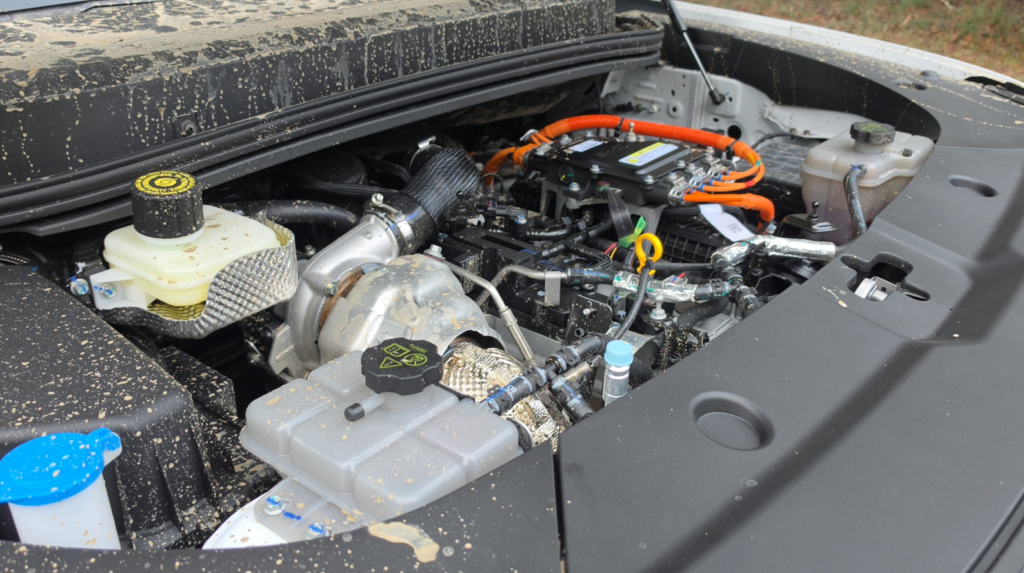
The headlining change is the move from a 1.5-litre to a 2.0-litre turbocharged petrol engine, now producing 200 kW and 360 Nm. Up from 170 kW and 310 Nm in the Shark 6 Premium. But the more significant upgrade is buried deeper in the EHS hybrid transmission: a substantially larger generator motor.
Where the Premium’s generator could push 70 kW of power into the battery, this new unit manages 90 kW. That 20 kW increase sounds modest on paper, but its effect on real-world performance is profound. More generating capacity means the system can maintain battery state of charge under heavy load far more effectively and that directly enables the Performance’s headline claim: a 3,500 kg tow rating, up from 2,500 kg on the Premium.
The combined system output now sits at 350 kW and 700 Nm to the wheels, roughly 9 to 10 per cent higher than the Premium. The same 29.6 kWh LFP Blade Battery carries over unchanged but the improved drivetrain efficiency drops the 0–100 km/h sprint to 5.5 seconds, making the Shark 6 Performance the fastest ute currently on sale in Australia.
Key Specs
| Spec | Figure |
|---|---|
| System Output | 350 kW / 700 Nm |
| 0–100 km/h | 5.5 seconds |
| Tow Rating | 3,500 kg |
| Fuel (SOC >25%) | 1.3 L/100 km |
| Fuel (towing) | 18 L/100 km (claimed) |
| Battery | 29.6 kWh LFP Blade |
| DC Charging | 55 kW |
| AC Charging | 7 kW |
On the Hook: Towing Performance
BYD claims a towing fuel consumption of just 18 L/100 km, verified by their engineers towing a 3.5-tonne, 25-foot JCO Outback Caravan through Queensland. If that figure holds up under independent testing, it will be exceptional for a vehicle pulling that kind of weight.
At the AARC, I put the Performance through a series of 80 km/h braking and lane-change tests with a caravan weighing just under 3 tonnes attached. The stopping distances were impressive, and what struck me most was the absence of sway during the lane-change runs which require deliberate, aggressive inputs designed to induce trailer instability. With nearly 3 tonnes on the back, the Shark 6 Performance felt composed to the point of feeling almost detached from the load.
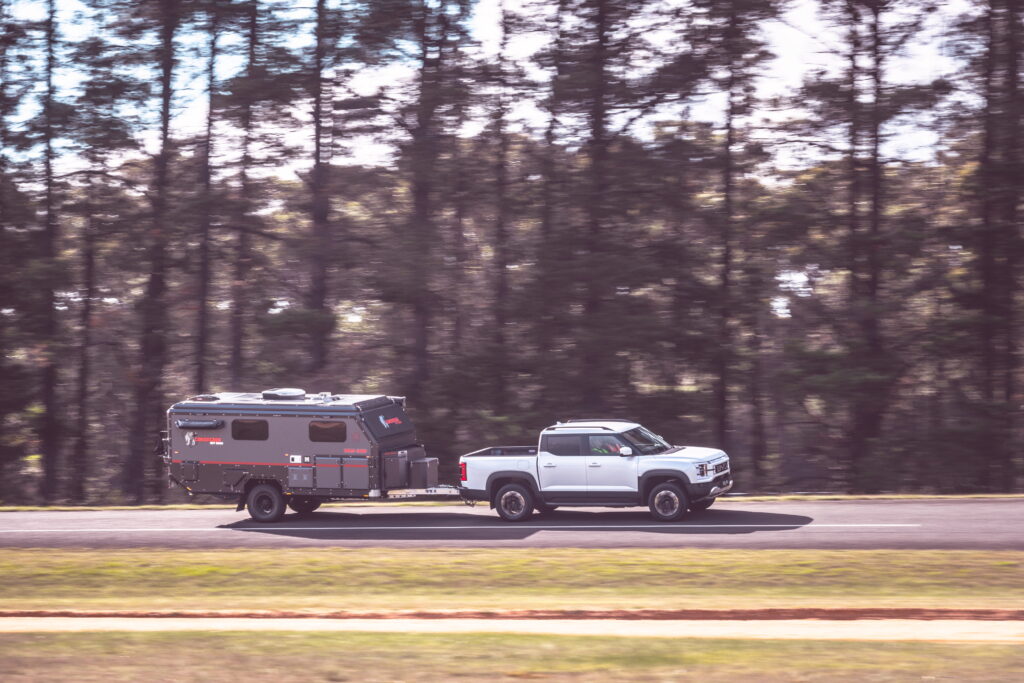
With nearly 3 tonnes on the back, the Shark 6 Performance felt composed to the point of feeling almost detached from the load.
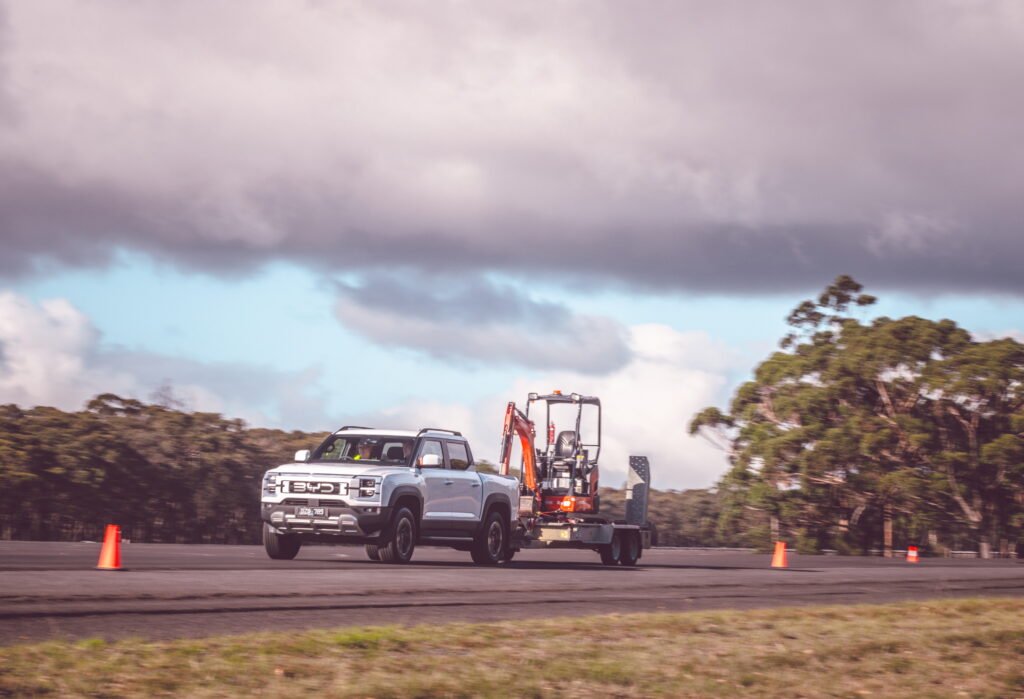
Switching to a 2.7-tonne excavator, which presented a very different aerodynamic profile to the caravan, the behaviour remained stable throughout. Braking distances did appear marginally longer without the caravan’s brick-wall frontal area. The larger generator motor is the key reason this composure is possible. The EHS system’s ability to maintain battery charge under stress means the electric drive motor is never starved of energy, and that is an elegant solution that has historically required large-displacement diesel engines to solve.
Crawl Mode: The Software Fix That Should Have Come Sooner
Hill-climbing has been the Shark’s most-cited shortcoming since launch, and BYD has addressed it with a new Crawl Mode. It’s available from factory on the Performance and will roll out as a free over-the-air update to all existing Shark owners.
The system functions as a highly sophisticated traction control programme that simulates a low-range transfer case using the standard gearing ratio. Rather than physical low-range hardware, Crawl Mode electronically manages wheel speed and applies individual wheel braking the instant it detects slip, maintaining a controlled, low-speed crawl throughout.
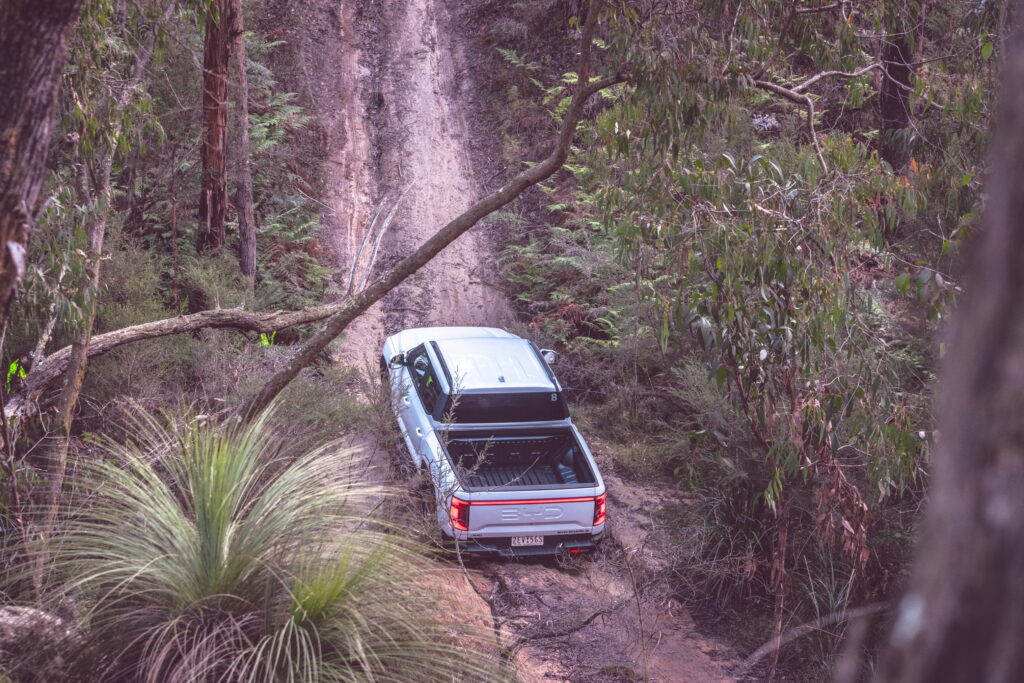
At the AARC, I tested it on a 30-degree (60 per cent) grade across both concrete and rutted gravel surfaces. On concrete, the Shark climbed without drama at a steady 3 to 4 km/h. On gravel, a deep rut required a second run with more momentum to clear, but once through it crawled up cleanly. The hill descent control managed a rutted gravel descent at a controlled 2 to 3 km/h with no driver input required.
This is the update Shark owners have been asking for. How many OEMs can deliver meaningful new capability to vehicles already in customers’ hands, at no charge, via an overnight software update? Very few. BYD can, and they have.
Interior: Familiar Territory, With Trade-Offs
(Photo: BYD Australia)
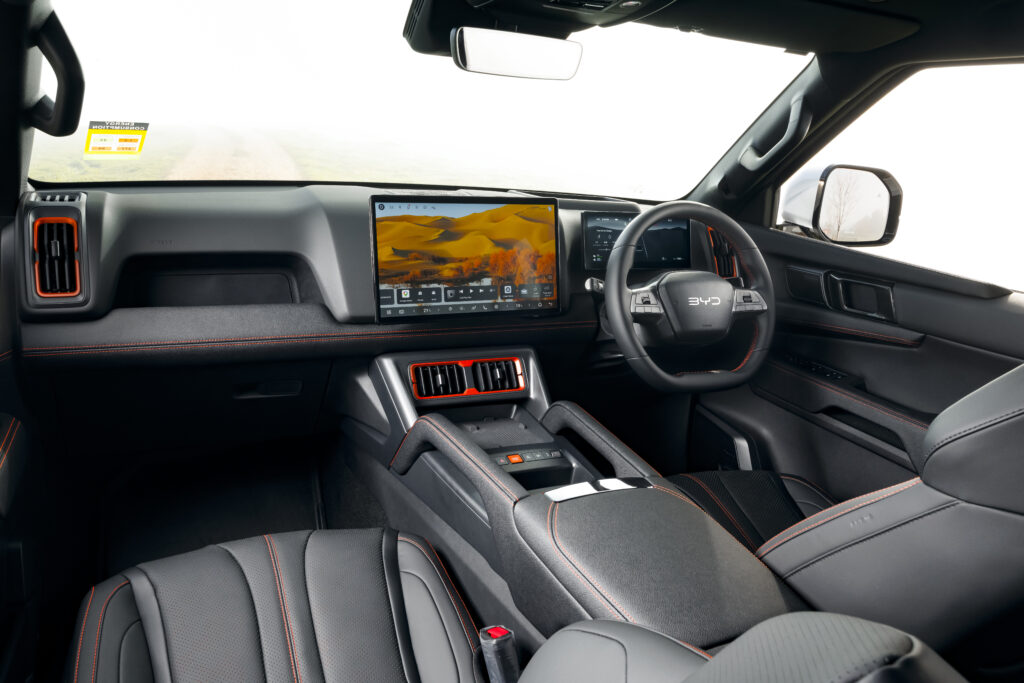
Step inside and the Performance cabin is largely familiar. The dashboard architecture, storage layout, door cards and rear seat configuration are all carried over from the Premium. The rear bench remains spacious with ISOFIX points on the outer seats, rear-facing air vents, a 230V AC outlet, and a fold-down centre armrest with cupholders.
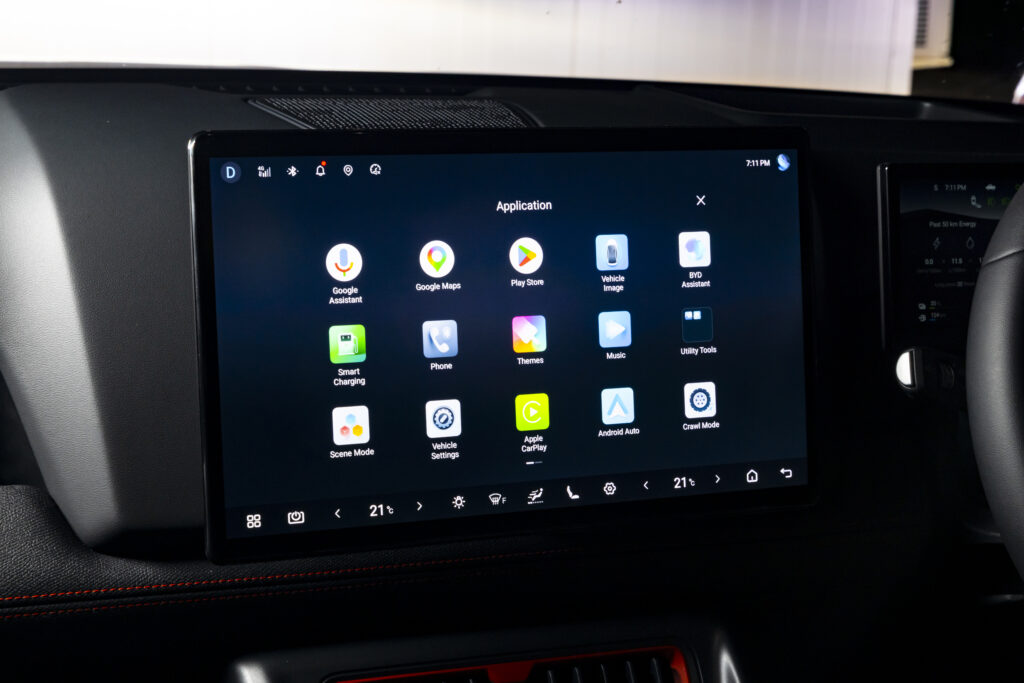
There are a few differences worth noting. The fighter-jet button cluster on the centre console is gone, replaced by a cleaner flat layout with a bit of extra storage. The steering wheel is now trimmed in synthetic rather than genuine leather and loses the traditional centre console gear shifter in favour of a column-shift gear selector. The infotainment screen no longer rotates and is locked to landscape orientation, but it gains Google Automotive Services and Play Store access. That is a genuinely useful addition not available on the Premium.
The Verdict
The BYD Shark 6 Performance doesn’t just raise the bar for towing in a super hybrid. It reframes what a working ute powertrain can look like. The bigger generator motor is the real engineering story here, enabling a 3,500 kg tow rating and improved efficiency under load at the same time. Crawl Mode convincingly addresses the one legitimate criticism of the original Shark and the free OTA rollout to existing owners speaks to BYD’s confidence in the platform. For anyone regularly pulling above 2,500 kg, the case is straightforward.
Do you think the Shark 6 Performance will sell well in Australia? Drop your thoughts in the comments below and subscribe to Beyond EV for more new energy vehicle coverage.

