
Chery’s first ute pairs a 2.5-litre turbo-diesel with an electric motor for a combined 350kW and 800Nm, more torque than any hybrid rival on sale in Australia, and the brand has locked in a fourth-quarter launch.
Chery has never sold a ute in Australia. That changes in the final quarter of 2026, and the numbers behind the Stockman are now locked in. A 2.5-litre turbo-diesel pairs with Chery’s Super Hybrid system for a combined 350kW and 800Nm, four-wheel drive is standard, and the hybrid system is good for up to 100km of electric-only range around town.
It’s a curveball for the segment and the first diesel-electric plug-in hybrid ute anywhere in the world. Every other electrified ute on sale or confirmed for Australia, the BYD Shark 6, the GWM Cannon Alpha PHEV, the Ford Ranger PHEV and the incoming JAC Hunter, runs a turbo-petrol engine paired with electric motors. Chery has gone the other wa, betting that diesel torque and towing credibility matter more to ute buyers than a petrol-hybrid efficiency pitch.
Variants: one powertrain lands now, a second follows in 2027
The Stockman launches with the diesel Super Hybrid alone. A petrol option joins the range in 2027, giving buyers a genuine choice between outright towing torque and a more road-focused setup. “Offering both Petrol and Diesel Plug-in Hybrid options allows us to cater for customer demands, be it off-road performance or a more urban focus,” said Chery Australia chief operating officer Lucas Harris. Grade names, pricing and standard equipment for both variants are still to be finalised.
| Spec | Diesel Super Hybrid |
|---|---|
| On sale | Q4 2026 |
| Price | TBC |
| Power/Torque | 350kW / 800Nm |
| EV Range (NEDC) | Up to 100km |
| Combined Range | TBC |
| Battery | TBC |
| Braked Towing | 3,500kg |
| Unbraked Towing | 750kg |
| Ground Clearance | ≥247mm |
| Standard Inclusions | All-terrain tyres, front/centre/rear diff locks, double wishbone front suspension, leaf spring rear axle |

Powertrain: diesel torque meets electric assist
The Stockman’s outputs put it near the top of the electrified ute pack. Only the JAC Hunter’s 360kW and 1,010Nm beats it outright. The BYD Shark 6 Performance matches the 350kW figure but falls 100Nm short on torque and the GWM Cannon Alpha PHEV trails on both counts at 300kW and 750Nm.
Chery hasn’t detailed how many electric motors sit behind that combined figure, nor the diesel engine’s individual output or the battery’s capacity. But if it is the same Super Hybrid System found on the likes of the Chery Tiggo 9, expect to see dual electric motors on the front axel with a 3rd electric motor on the rear axle.
The 100km electric-only range is quoted on the NEDC test cycle.
Towing and off-road: the numbers tradies actually care about
Braked towing of 3,500kg and unbraked of 750kg puts the Stockman right at the benchmark set by the Ranger and HiLux, a figure the BYD Shark 6 Premium and Dynamic still don’t reach without stepping up to the Performance grade. Early reports point to a 1,000kg payload, which would be among the best in the electrified ute class if it holds at launch.
Front, centre and rear differential locks are individually selectable, a feature the Shark 6 goes without entirely. Ground clearance sits at 247mm or more, double wishbone suspension handles the front axle, heavy-duty leaf springs sit out back, and all-terrain tyres are fitted standard rather than the road-biased rubber some rivals ship with.
Ute buyers expect a vehicle that can work hard during the week, tackle weekend adventures and deliver strong value. Our Super Hybrid technology is designed to meet those expectations by combining electric driving capability with the power, towing and off-road performance customers demand.
Chery Australia COO Lucas Harris
Size and cabin: dimensions land close to the Shark 6
At 5,450mm long, 2,010mm wide and 1,890mm tall on a 3,250mm wheelbase, the Stockman sits within millimetres of the Shark 6 on most measures: a touch longer, noticeably wider, but shorter in height and on wheelbase. The cargo tub measures 1,560mm by 1,560mm by 500mm, enough for a standard pallet and most weekend gear without a tray swap.
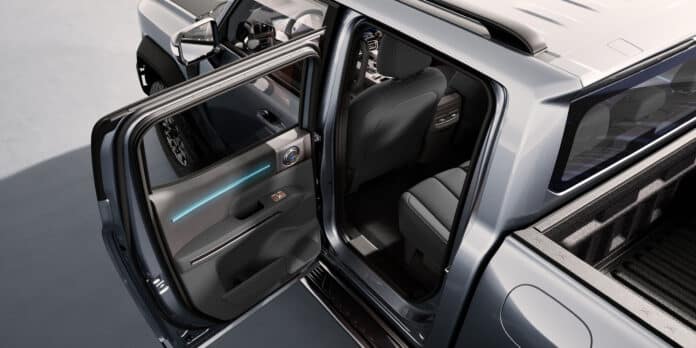
Chery has flagged suede trim on the dash and roof lining, leather seats front and rear, heated and ventilated front pews, wireless phone charging, dual-zone climate and a premium sound system. A lie-flat front passenger seat and head-up display have also been shown off ahead of launch. None of it is confirmed as standard across the eventual grade walk, but it signals a cabin built to compete on comfort as much as capability.

The rivals: the PHEV ute pack keeps growing
The dual-cab ute segment is the single biggest prize in the Australian new car market. The 4×4 class alone cleared more than 215,000 sales in 2025 and the electrified corner of that segment has gone from a BYD-only proposition into a melting pot of options in about eighteen months.
BYD’s Shark 6 remains the one to beat, commanding around 70% of the PHEV ute segment and pricing its range from $55,900 to $62,900 plus on-road costs across the Dynamic, Premium and Performance grades. The GWM Cannon Alpha PHEV undercuts it from $54,490 drive-away, the Ford Ranger PHEV now starts around $59,000 drive-away after recent price cuts, and the JAC Hunter is due from under $50,000 plus on-road costs when it arrives in August. Chery hasn’t put a number on the Stockman yet, but its pricing history across the Tiggo range suggests it won’t want to sit above the Shark 6.
| Ute | Powertrain | Combined Output | Braked Towing |
|---|---|---|---|
| Chery Stockman | Diesel PHEV | 350kW / 800Nm | 3,500kg |
| JAC Hunter | Petrol PHEV | 360kW / 1,010Nm | 3,500kg |
| BYD Shark 6 Performance | Petrol PHEV | 350kW / 700Nm | 3,500kg |
| GWM Cannon Alpha PHEV | Petrol PHEV | 300kW / 750Nm | 3,500kg |
| Ford Ranger PHEV | Petrol PHEV | 207kW / 697Nm | 3,500kg |
Chery in Australia: its biggest test yet
Chery relaunched here in 2023 after an earlier run in the 2010s ended within a few years. The comeback has gone well. The Tiggo 4 is a regular top-10 fixture on the monthly sales charts and Chery’s combined volume with sister brand Omoda Jaecoo now sits inside the country’s top five manufacturers by monthly sales.
A ute is a different proposition entirely. Fleet buyers, tradies and rural customers expect years of proven reliability before they’ll switch allegiance, and that’s the ground the Ranger and HiLux have defended for decades.
The name carries some local baggage of its own. Suzuki used Stockman on its Sierra-based ute through the 1980s and ’90s, and when Chery’s naming competition (more than 20,000 entries, narrowed to a shortlist including Ironbark, Bushwalker and Ridgeback) landed on the same name, Suzuki Australia responded with a cheeky statement calling it “flattered” and noting that imitation is the sincerest form of flattery. Good-natured jabs aside, it’s a name with genuine recognition in this country.
Timeline: diesel lands in Q4, petrol follows in 2027
The diesel Super Hybrid reaches Australian showrooms in the fourth quarter of 2026. The petrol plug-in hybrid follows in 2027, and Chery has flagged non-hybrid diesel and petrol options as possibilities further down the track, though nothing is confirmed there yet.
Full grade structure, standard equipment and local pricing are still to come, and that’s where the real verdict on the Stockman gets delivered. Chery has shown its hand on power and towing. Next it needs to back that up on price.

