

Wang Chuanfu told nearly a thousand shareholders BYD will be the world’s largest automaker by scale within five years and spent most of the meeting explaining exactly what stands between here and there.
BYD held its 2025 Annual General Meeting on June 9 at its Pingshan headquarters in Shenzhen, with record attendance from shareholders and shareholder representatives. Chairman and President Wang Chuanfu declared that BYD will achieve the status of the world’s largest automaker by scale within the next five years.
In the first five months of 2026, cumulative BYD sales exceeded 1.405 million units but were down more than 20% year-on-year. The A-share stock price has fallen from its May 2025 peak of 137.67 yuan to just over 90 yuan. Year-to-date as of June 9, BYD’s share performance sat at -5.97%.
The Battery Bottleneck
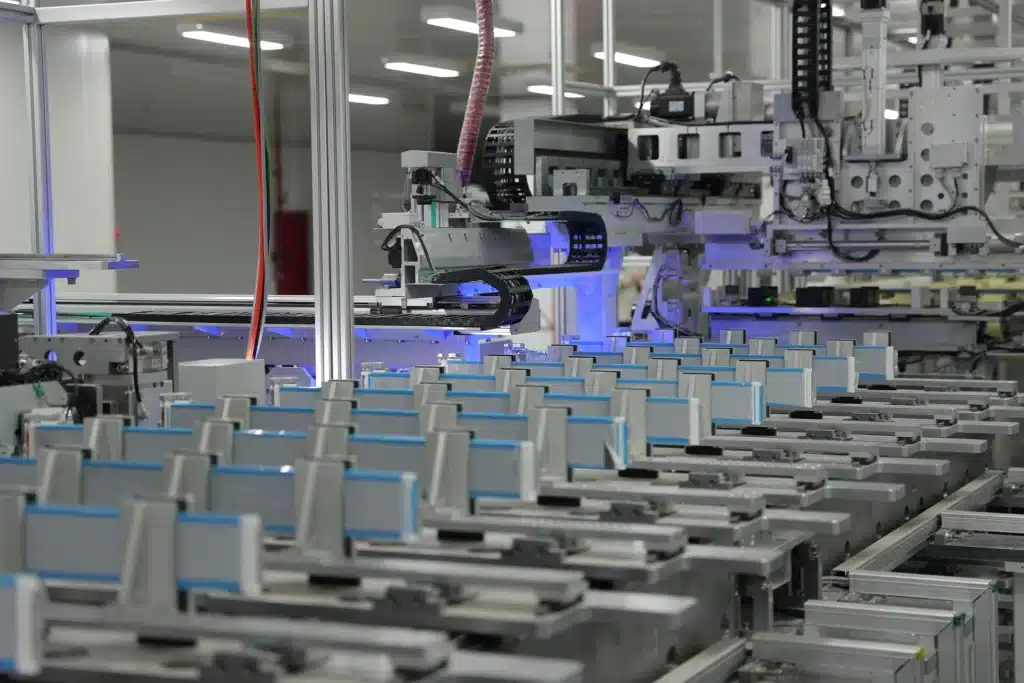
The most operationally significant part of the speech was about production, not strategy. Wang Chuanfu said flatly: “how many cars BYD sells in 2026 will depend on how much battery it can produce”. The second-generation Blade Battery, launched in March, has strong market demand but the new material system and manufacturing complexity mean the production line is still ramping. Capacity is climbing by increments of 20,000 to 30,000 units per month. Full capacity release is not expected until 2027.
This is not the first time Wang Chuanfu has flagged the issue. At the Yangwang Business Research Institute conference on May 15, 2026 he said publicly that “orders exceed supply, capacity is stuck on the battery side”, with several top-selling models across BYD’s four brands waiting on battery supply. The second-gen Flash-Charge Blade Battery can charge from 10% to 70% in five minutes. That performance leap came with a manufacturing trade-off: old and new production lines being adjusted simultaneously.
The High-End Problem
Wang Chuanfu used a story about a viral essay called “A Love Letter to Mom” to make his point about premiumisation. The essay resonated not because of clever writing or flashy production, but because it returned to something honest and simple. His argument: that is exactly what BYD needs to do with its premium push in China. Not rely on influencers, not spend on spectacle. Make the product precise enough that the brand earns respect on its own terms.
His diagnosis of why BYD is already considered a premium brand in Australia, Europe, and South America, but not yet at home in China, was that the product is not precise enough and the technology is not good enough. No blame was shifted elsewhere. The solution he outlined was equally plain, to raise the proportion of high-end models, steadily shrink the low-end share, and back it with new technology launches in 2026 and more significant breakthroughs in 2027. The 2025 results already show overseas operations as a structural bright spot with the international business generating a gross margin of 28.1% compared to compressed domestic margins.
Intelligent Driving at Scale
Wang Chuanfu framed intelligent driving as “embodied intelligence,” a term BYD uses to describe integrating AI capability across the whole vehicle rather than treating it as a software layer bolted on top. There are currently 3.15 million BYD vehicles equipped with intelligent driving systems on roads globally, generating over 200 million kilometres of driving data every day. The intelligent driving R&D team exceeds 5,000 engineers.
The strategic bet is on timing. Wang Chuanfu’s view is that L3 and L4 autonomous driving will be commercially implemented ahead of most industry forecasts. China’s L3 regulations are expected to be fully in effect by July 1, 2027. BYD says it is fully prepared across chips, algorithms, data, and ecosystem. The God’s Eye 5.0 system, a full-stack in-house large model, is targeting L4 deployment in high-frequency operational scenarios like taxis and ride-hailing with nationwide mapless NOA coverage as the baseline. BYD has simultaneously established AI training centres in Europe, South America, Southeast Asia, and the Middle East, so it can activate quickly the moment regulations move.

Overseas: Ahead of Target
BYD’s 2025 overseas exports exceeded one million units for the first time reaching 1.05 million vehicles, a year-on-year increase of approximately 140%. Wang Chuanfu indicated at the AGM that the 2026 overseas target, set at 1.3 million units at the start of the year, is tracking ahead. The Hungary factory is about to begin production, Indonesia is entering mass production, Thailand is already running, and Brazil serves as the South American production hub. In the Middle East, demand is reportedly so strong the phrase Wang used translates as “cars hard to find.” Australia was noted as showing steady growth.
On flash charging infrastructure overseas, BYD’s target is approximately 3,000 fast charging stations across Europe by end of 2026. Wang Chuanfu made clear BYD does not intend to keep the megawatt flash charging technology proprietary, describing its goal as driving healthy development across the entire new energy vehicle industry.
BYD’s Financial Position
Revenue
¥804B
+3.5% YoY
Net profit
¥32.6B
−19% YoY
Gross margin
17.7%
↓ from 19.4%
R&D spend
¥63.4B
+17% YoY
NEV sales
4.60M
+7.7% YoY
Overseas exports
1.05M
+140% YoY
Revenue vs net profit (¥B)
Gross margin trend (%)
2025 revenue by segment
Sales: domestic vs overseas (M units)
Key ratios
BYD’s full-year 2025 revenue reached 804 billion yuan, a 3.46% increase year-on-year. Net profit fell -19% to 32.62 billion yuan with gross margin narrowing to 17.74% from 19.44% the prior year. R&D spending hit 63.4 billion yuan, up 17%, nearly double the net profit figure for the year. BYD paid more in domestic taxes than it earned in net profit.
BYD’s Hong Kong-traded shares have fallen -33% over the past year, from HK$132.20 to HK$88.40. Wang Chuanfu acknowledged the stock does not fully reflect the company’s potential and urged investors toward a value rather than a short-term trading perspective. All proposals at the AGM were approved, including the 2025 Board report, audited financial statements, and profit distribution plan, with approval rates generally above 95%.
The tone Wang Chuanfu held throughout was consistent: no excuses, no competitor blame, no spin on the difficult numbers. The battery bottleneck is acknowledged. The domestic premiumisation challenge is acknowledged. The path forward is technology and product execution, not narrative. BYD has been here before at inflection points where the numbers looked soft and the technology pipeline was the only honest answer and they have consistently delivered on that pipeline. Whether or not 2027 marks the inflection point Wang Chuanfu is signalling, is what investors and interested parties need to keep their eye on.
Sources
- BYD 2025 Full-Year Financial Results — CnEVPost, March 27, 2026 https://cnevpost.com/2026/03/27/byd-2025-full-year-results/
- BYD 2025 Annual Report — Revenue, R&D, Exports — BigGo Finance, March 30, 2026 https://finance.biggo.com/news/HYuiPZ0BTwP6zY3Hr-li
- BYD 2025 Annual Report In Context (margins, Tesla comparison) — CleanTechnica, March 30, 2026 https://cleantechnica.com/2026/03/30/byd-2025-annual-report-in-context/
- BYD Reports Drop in Earnings Despite Record Sales — Yahoo Finance / Reuters, March 30, 2026 https://finance.yahoo.com/sectors/technology/articles/byd-reports-drop-earnings-2025-092609022.html
- BYD Chairman Urges Investor Patience as Stock Falls 33% — CnEVPost, June 9, 2026 https://cnevpost.com/2026/06/09/byd-chairman-urges-investor-patience-stock-falls/
- BYD to Become World’s Largest Automaker Within Five Years — Wang Chuanfu AGM Address — Car News China, June 9, 2026 https://carnewschina.com/2026/06/09/byd-to-become-worlds-largest-automaker-by-scale-within-five-years-says-chairman-wang-chuanfu/
- BYD Shareholders Approve 2025 Results and Profit Distribution — TipRanks, June 9, 2026 https://www.tipranks.com/news/company-announcements/byd-shareholders-approve-2025-results-and-profit-distribution-at-agm
- Wang Chuanfu Boosted the Morale of BYD Shareholders — Jianshi, June 9, 2026 https://jianshiapp.com/wang-chuanfu-boosted-the-morale-of-byd-shareholders/

